Could Your Social Security Benefit Be Cut?
The next elected Senate could help decide what happens to Social Security...
A Big Week for the Girls
The girls had a busy week last week. Our church held a day camp for the older girls where they did art, sewing, cooking, and other things girls do. I’m not really sure what all that entails, but they seemed to have a good time!
Over the weekend, after a lot of cajoling, coaching, and encouragement, Amelia dove into the deep end of our pool to retrieve a toy. It’s hard to believe how far she has come.
A few years ago, we had her in swimming lessons, and until we got the pool this year, she clung to us like a leech whenever she got in the water. Now she is diving into the deep end. It has been amazing to watch her confidence grow this summer.
Watching Amelia do something that once seemed almost impossible got me thinking about something else many people have a hard time imagining.
Could Social Security Really Be Cut?
It's difficult to imagine Social Security benefits being cut, but that is a real possibility.
The Atlantic recently published an article titled “The Social Security Reckoning Is Finally Coming."
It explains that Social Security has paid out more than it has collected for the past 16 years. The program has covered the difference by drawing money from its trust fund.
According to the 2026 Social Security Trustees Report, the retirement trust fund is projected to be depleted in late 2032.
That does not mean Social Security will disappear. Payroll taxes will still come into the program, but without action from Congress, that revenue would cover only about 78 percent of scheduled retirement benefits.
In other words, scheduled benefits could be cut by approximately 22 percent.
Our Next Senator May Have to Vote on It
The Atlantic article made another point that should be especially interesting to South Carolinians: The senator elected this November will still be in office when the Social Security retirement trust fund is projected to be depleted.
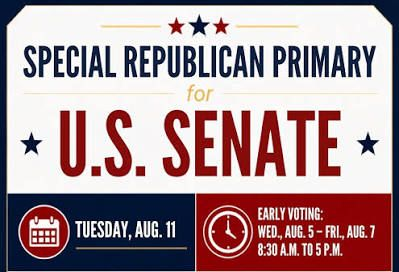
As you may have heard, Senator Lindsey Graham unexpectedly passed away a few weeks ago. A special Republican primary will be held on August 11, followed by the general election in November.
That means the person South Carolinians elect could help decide what happens to the Social Security benefits of millions of Americans.
That’s a little scary to think about, isn’t it? I’m not sure I would want to be serving in Congress when that vote comes around!
What Can You Do Today?
There are no painless solutions. Congress could raise taxes, change benefits, borrow more money, or use some combination of the three. We cannot control what Congress will do, but we can think through how those possibilities might affect our retirement plans.
First, when you claim Social Security matters. If you need help deciding when to begin your benefits, we would be happy to help you compare the different options. If you are married, we can also help you think through how to coordinate your benefits with your spouse.
Remember, when one spouse dies, the surviving spouse will generally receive the higher of the two Social Security benefit amounts, not both. This is one reason coordinating your benefits is so important.
Second, pay attention to taxes. Traditional 401(k)s and IRAs can be powerful tools, but you will generally owe taxes when you withdraw the money. What happens if tax rates are higher in retirement when you may need it?
It may be worth looking at whether converting some traditional IRA money to a Roth IRA makes sense. You pay taxes on the amount converted today, but qualified withdrawals can be tax free later.
Roth conversions do not make sense for everyone, but if you believe taxes may rise, it could be worth running the numbers.
Lastly, think about what a possible Social Security reduction would mean for you.
Would you invest the same way you do today if you believed your benefit might receive a 20 percent haircut? Would you need to save more, work longer, spend less, or create income from another source?
Has your retirement plan made any allowance for that possibility?
Building Your Bridge to Retirement
These are a few of the things we help our clients think through.
The decisions we make today are like boards we are placing in a bridge to our future. We cannot know exactly what Congress will do, but we can work to put the right boards in place so we have a stronger bridge to carry us through retirement.
If you are concerned about how changes to Social Security or taxes could affect your retirement, let’s have a call or meet. We would be happy to help you think through it.
Until next week,
David C. Treece,
Financial Planner
864.641.7955
Clients Excel Blog